
"Some companies just can’t make their customers happy, and many of the companies are the kind that customers find it hardest to escape." . . .
Teaching Introduction to Business: A Faster, More Efficient Way to Prepare Students for Today’s Workplace
If you have the responsibility of preparing students for the challenges they'll face in tomorrow's tough and uncertain business environment, turn to the most efficient introduction to business textbook on the market—Business in Action.
Business in Action offers instructors and students a much-needed alternative to texts that are either overstuffed and overwhelming or so skimpy that they compromise essential coverage. With the comprehensive 20-chapter coverage that is up to 20 percent shorter than other texts, Business in Action sets the standard in high-productivity learning.
Throughout Business in Action, there is no filler and no fluff, and the examples were chosen carefully to illustrate important points without overloading the text. We invite you to do side-by-side comparisons with any other business text to see which one will make the best use of your students' time and energy for studying.
Each chapter is divided into six concise segments, each with its own Learning Objective. Each segment focuses on the most essential concepts and terminology to help students achieve that particular objective before moving on. The consistent structure simplifies course planning and class time allocation for instructors, and it helps students organize their reading, review, and test preparation.
Each chapter segment concludes with a comprehensive Checkpoint that helps students review and reinforce what they've learned in manageable doses, rather than reviewing an entire chapter at once. With this approach, each learning objective is addressed as a mini-chapter within the chapter, which helps students absorb new concepts in small, carefully metered segments and get confirmation before moving on to the next segment.
See on www.youtube.com
We Are Witness to a Seismic Change in Consumer Behavior

"It has never been more challenging for a brick-and-mortar retail merchant to succeed in an enduring way," Starbucks CEO Howard Schultz said.
'We are witness to a seismic change in consumer behavior,' said Schultz. And that seismic change is linked to technology."
The Fascinating Reason People Thought The Telephone Would Be A Total Flop

"Alexander Graham Bell wanted to sell his patents and technology for the telephone to Western Union, which was the leading telegraph company at the time. Bell’s price: $100,000. Western Union thought it was laughable.
Venture capitalist Ben Horowitz has a big post on why people should be optimistic about technology companies.
In it, he talks about how some of the most fundamental products in our lives today were laughed at by outsiders when they were first introduced.
Manufacturing: We Went to France to Find Out How Airbus Builds the World’s Biggest Passenger Jet

"The Airbus A380 is one of the most incredible planes flying today, even judged by size alone.
It usually seats around 500 passengers, but can hold as many as 853 — making it the largest passenger aircraft on the planet."
“Undercover Boss” CEOs Say What Really Changed After the Show
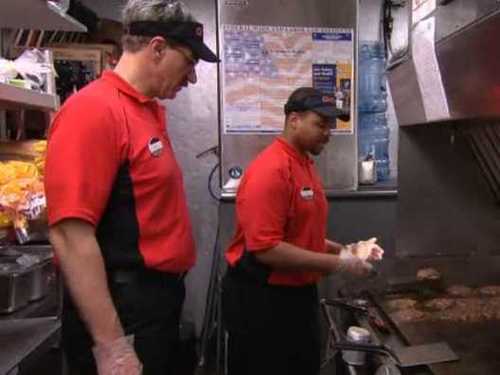
"It's not every day you'll see CEOs getting their hands dirty, working side by side with the rank-an-file.
But for four years, the CBS show "Undercover Boss" has given viewers that chance, showing 60 top executives doing regular jobs, from flipping hamburgers to installing alarm systems.
The show, however, has attracted its fair share of skepticism: . . ."
The World’s Most Brilliant Hedge Fund Manager Made a Video Explaining How the Economy Actually Works

"Ray Dalio manages the world's largest hedge fund, Bridgewater Associates.
It has a tremendous track record, so when the man talks about markets, people usually listen.
"Beyond that, Dalio is known for having one of the most refined understandings of the economy in the financial industry."
15 Small Business Owners Share What They Wish They’d Known When They First Started

Successful small business owners share the most important lesson they wish they'd known when they started.
Venture Capitalist Reveals Everything Entrepreneurs Needs to Do to Land Investors for Their Startup

Tom Kinnear (photo, left) has been involved as an investor, board member, or founder in starting 11 companies — five of them with a combined exit value around $700 million.
We caught up with Kinnear to discuss what entrepreneurs should do to land big money from big investors. Here's his advice: . . .
Photo credit: University of Michigan
How Apple Creates Such Amazing Products

Eric Barker (photo, left) writes, "Apple calls it concurrent or parallel production. All the groups— design, manufacturing, engineering, sales— meet continuously through the product-development cycle, brainstorming, trading ideas and solutions, strategizing over the most pressing issues, and generally keeping the conversation open to a diverse group of perspectives… it avoids this chronic problem of good ideas being hollowed out as they progress through the development chain."
Author bio – Eric Barker blogs at Barking Up the Wrong Tree